


How much are you willing to trade familiarity for efficiency?
It's a question that haunts me, and it sits at the heart of the debate between opinionated and flexible software. This is a short opinion piece, not a feature comparison.
At Estii we wrestle with it every week: how do you build a faster estimation workflow without asking people to throw away the habits they already trust?
The efficiency trap
Opinionated software backs one good way of doing things. That clarity is the point. But it also means leaving behind the comfort of a familiar workflow. People have to adapt, relearn, and accept a short-term cost for a longer-term gain. Not everyone wants to sign up for that.
The flexibility mirage
Flexible software sells you the opposite promise. Shape it to fit your process. Make it yours. Sounds ideal.
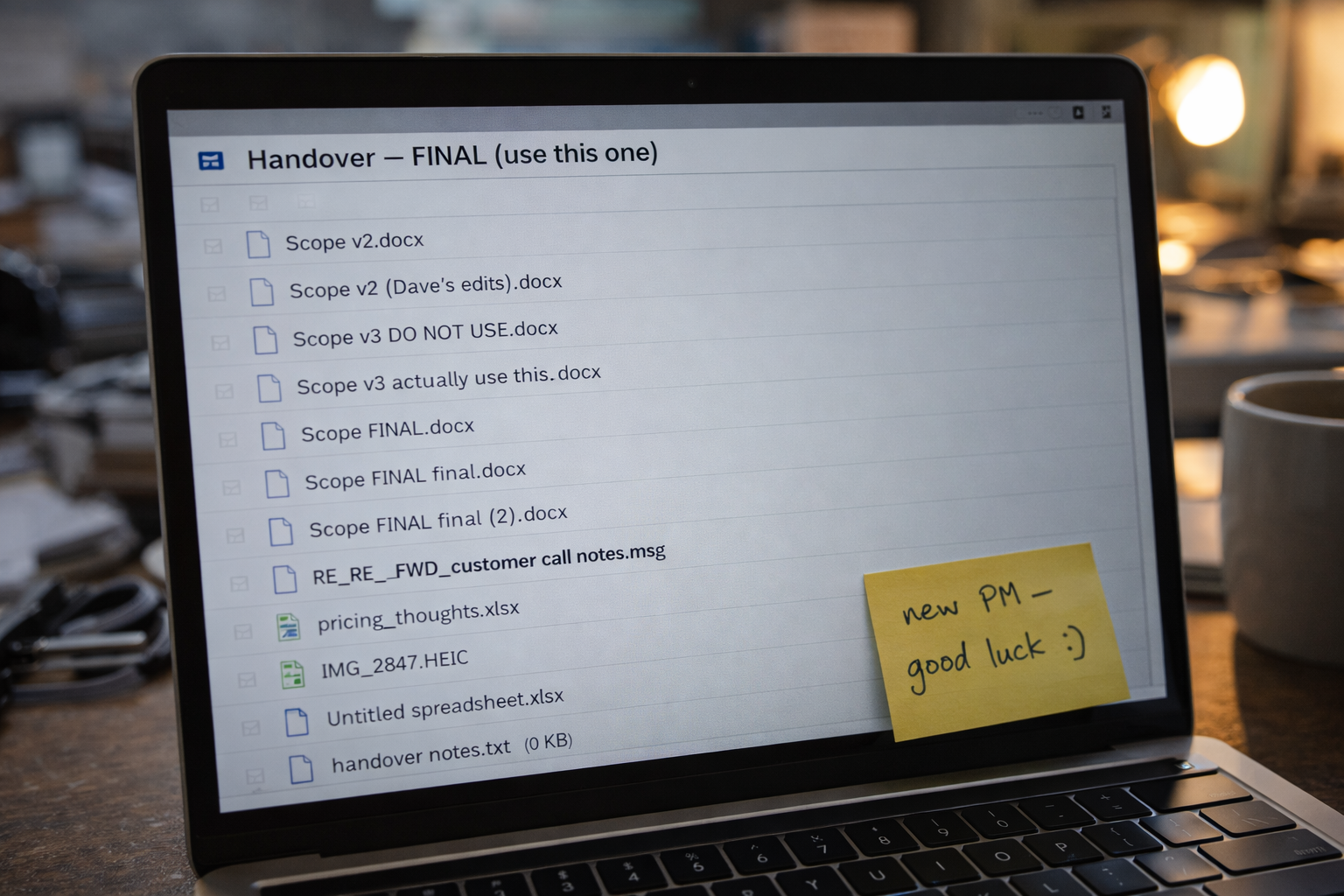
In practice, flexibility is where pricing spreadsheet problems breed. A workbook starts as a quick quote and ends up a maze of tabs, hidden columns, and formulas nobody dares touch. Every deal is a small archaeology project. The tool bends to fit you, and then it stops holding its shape at all.
That's the trap. Spreadsheets feel flexible because they have no opinion. They also have no memory, no structure, and no way to tell you when something's wrong.
The estimation hierarchy
Different people need to slice an estimate differently: by phase, feature, or task; by risk or priority; by resource and schedule; by cost, price, and margin. A spreadsheet forces all of that into one wide flat table, so every view fights every other view.
An opinionated tool can hide that complexity inside a hierarchy and surface the right slice in the right context. You don't lose the detail. You stop having to stare at all of it at once.
Estimation software trade-offs
Every estimation tool sits somewhere on the line between rigid and shapeless. Pick a tool that's too opinionated and it rejects how your business actually works. Pick one that's too flexible and you're back to maintaining a spreadsheet with nicer buttons.
The useful question isn't "which end of the line is right?" It's "which trade-offs can I live with, and which ones are quietly costing me margin?"
Embracing the discomfort
Change is uncomfortable, especially when it challenges a process your team has leaned on for years. But accuracy and speed at the point of sale are worth some short-term friction. The trade is initial effort for long-term clarity.
So, are you willing to sacrifice a bit of familiarity for efficiency? My answer is yes - but only for software that earns the trust by having a clear, defensible opinion about how estimates should work.