
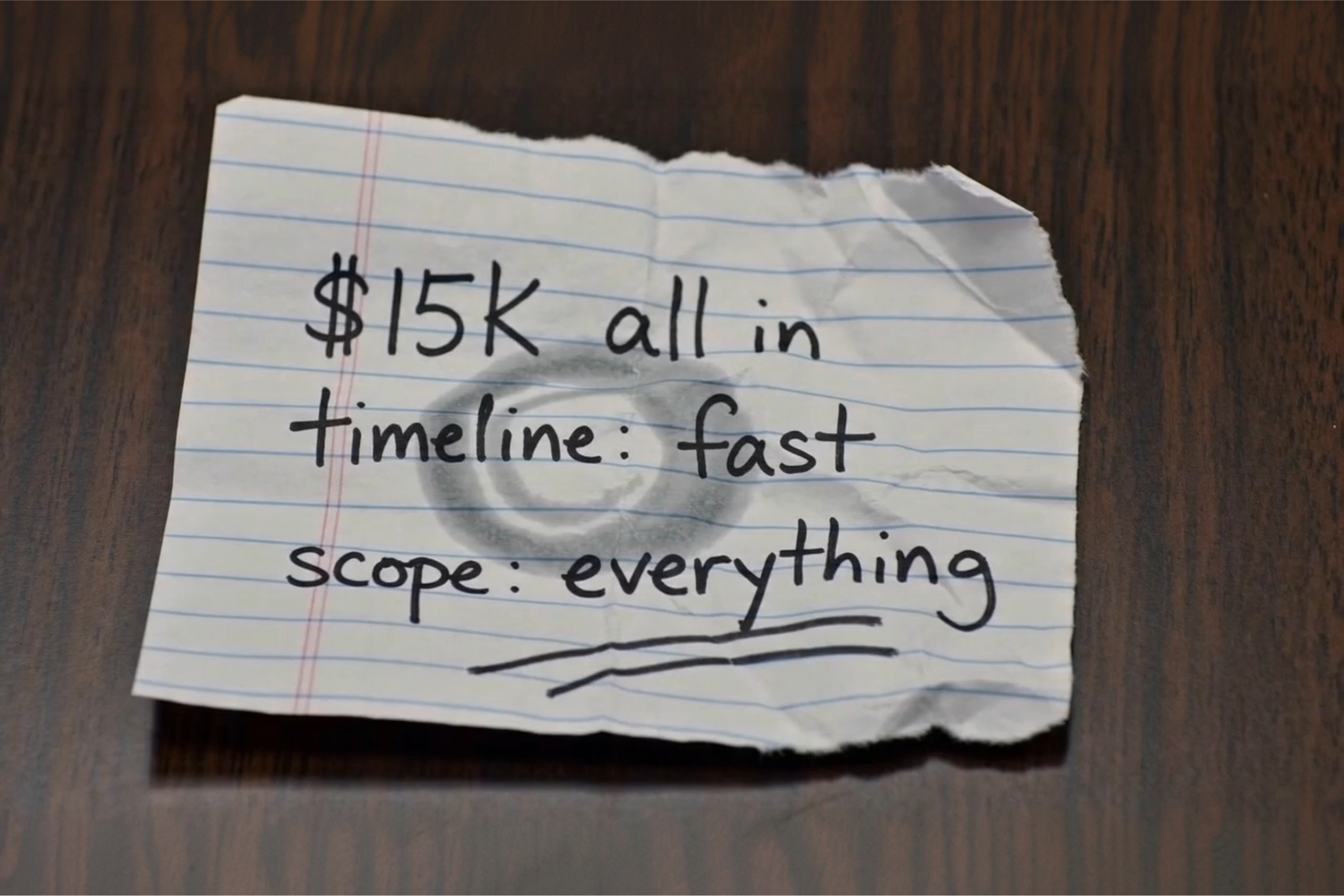


Pricing a scope of work in services is a moving target. The scope shifts, the timeline stretches, the buyer pushes back, and the number on the proposal has to keep up without eroding margin.
The teams that win more deals aren't the ones who guess faster. They're the ones who can re-price a changing scope in minutes, with their commercial guardrails still intact.
This guide walks through how to do that: the steps, the trade-offs, and why service estimation is cyclical, not linear.
What "pricing a scope of work" actually means
Pricing a scope of work is the process of translating a defined piece of services work (the deliverables, effort, roles, and duration) into a commercial number the buyer will accept and the business can deliver profitably.
Underneath that, pricing a scope is a negotiation between three moving variables:
- Scope: what's in and what's out.
- Timeline: when it starts, when it ends, how it's staged.
- Price: what the buyer pays and how it maps to cost and margin.
Change one, and the other two have to respond.
Why services pricing is cyclical, not linear
In a product-centric business, pricing is mostly linear. Presales qualifies the need, sales prices the SKU, the deal closes. The boundaries are clean.
Services don't work like that. Scope and price iterate together, often many times, before and during negotiation. The buyer adds a workstream. A delivery lead flags a resourcing risk. The CFO pushes back on margin. Each change ripples through the other two variables.
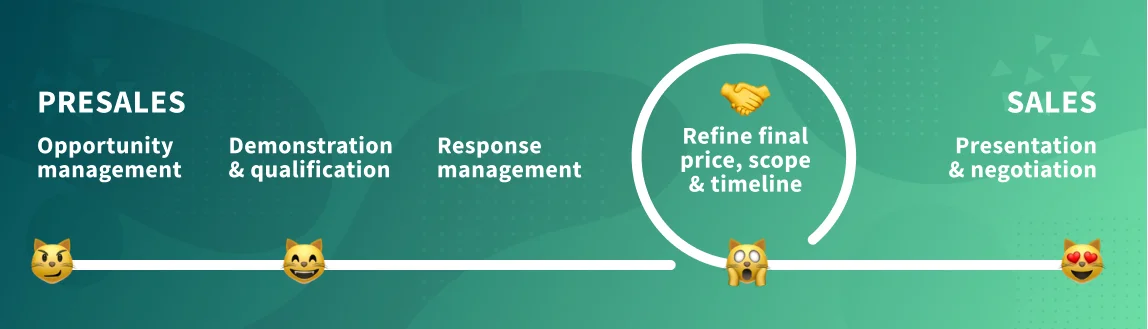 Service-centric B2B opportunity lifecycle
Keeping scope, price and timeline in sync is a constant trade-off between accuracy, speed and commercial risk.
As proposals get more complex, iteration counts go up and iteration time goes from hours to days to weeks. That's where deals stall. It's also where last-minute, unqualified scope additions get bolted on to save the close, and where margin quietly disappears.
How to price a scope of work: 6 steps
Here's a repeatable process for pricing scope in services deals. It assumes you already have cost rates, bill rates and a rough shape of the work.
1. Break the scope into deliverables, not hours
Start with what you're delivering, not how long it takes. List the outcomes, workstreams or phases the buyer is paying for. Hours come later. If you can't describe a deliverable in a sentence, it's not scoped tightly enough to price.
2. Size the effort by role, not by person
For each deliverable, estimate effort by role: solution architect, senior engineer, PM, QA. Don't anchor to specific people yet. Teams change, availability shifts, and named-resource estimates lock you into assumptions that break the moment someone leaves the project.
3. Layer in costs, rates and margin
Apply your cost rates to get the true cost of delivery. Apply bill rates to get revenue. The gap is your gross margin, and that's the number you need to protect as scope moves. If you don't know your margin at the point of sale, you're pricing blind.
4. Build the timeline off the effort, not the deadline
Let the effort drive the schedule. If the buyer's deadline doesn't fit, surface the gap early. It's cheaper to negotiate scope or phasing now than to eat overruns later. A timeline pulled to fit a date without adjusting scope is a future margin problem.
5. Stress-test for commercial risk
Before you send the proposal, pressure-test it:
- What happens to margin if the project slips 10%?
- Which assumptions, if wrong, hurt the most?
- Where is scope vague enough to cause a change-order fight?
Tighten the language around the risky bits. Price in contingency where the risk is real, not decorative.
6. Re-price, don't patch, when scope changes
When the buyer pushes back or adds scope, don't bolt changes onto the existing number. Re-run the process: adjust deliverables, effort, timeline, margin. A fast re-price protects the deal. A patched number protects nothing.
Why speed matters as much as accuracy
Presales teams understand the balance between scope, time and risk. Sales teams understand the numbers and customer urgency. The win happens when both can iterate together, quickly, without losing the thread.
Most teams still can't. They pass copies of pricing spreadsheets back and forth, then manually update the proposal and the CRM. Every iteration costs hours. Every hour is a chance for the buyer to cool off or a competitor to get in front.
The faster you can re-price a changing scope, the more confidently you can negotiate, and the less tempting it is to discount your way out of a corner.
Where Estii fits
Estii connects scope, schedule and price so they move together. Adjust one, the others update. Re-price a deal in the time it used to take to find the right tab.
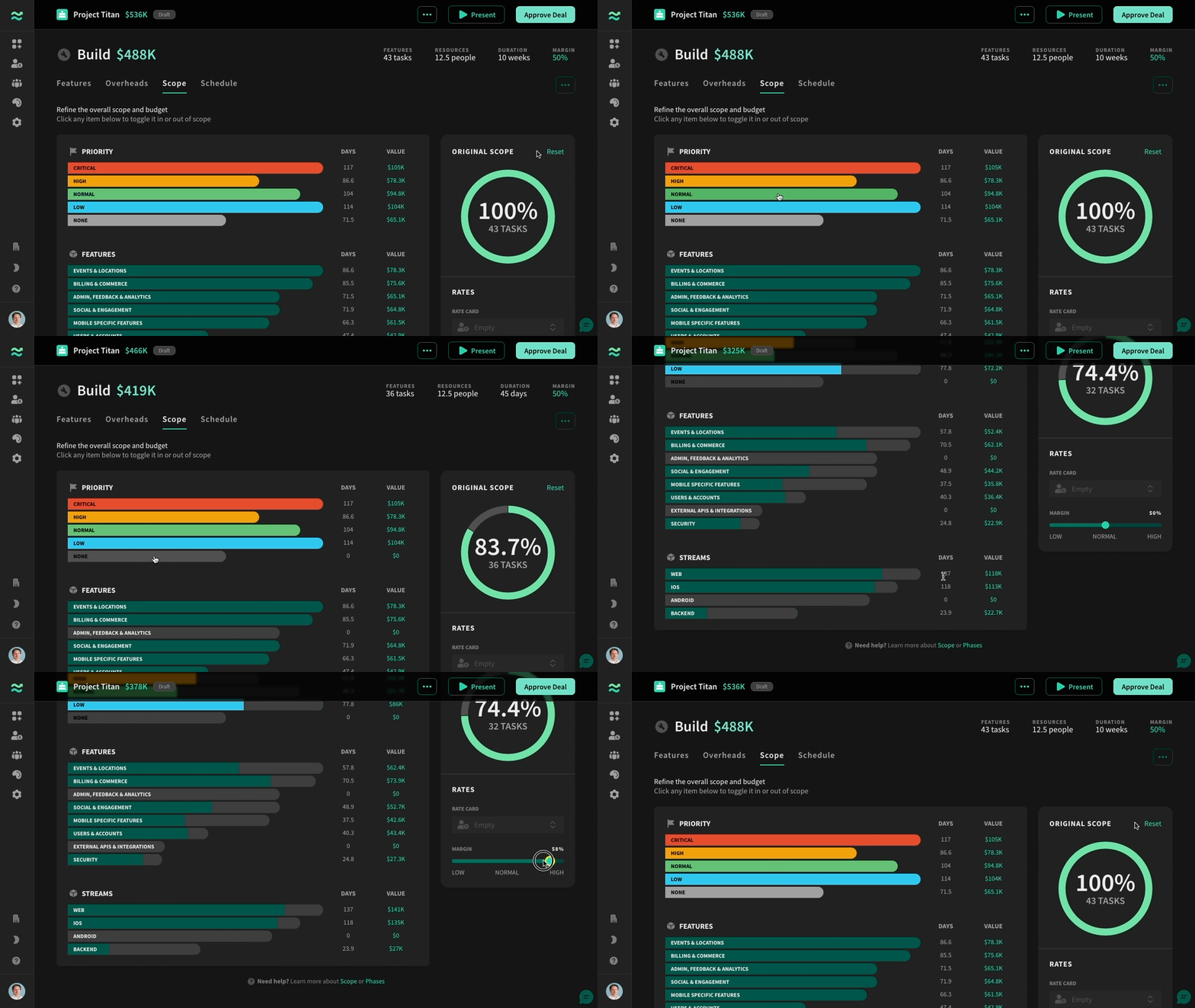 Deal scope adjustment
If your current flow is a spreadsheet ping-pong between presales and sales, that's the problem worth fixing next. You can try Estii for free at estii.com.