



Discounts are easy. Profitable discounts are not. Most teams treat discounting as one lever, "reduce price", and quietly train buyers to ask for more while burning the margin that funds delivery.
The fix is a rule, not a bigger spreadsheet. Never concede price without getting something back. Scope, timeline, terms, or risk, pick one and trade.
Discounting is a trade, not a gift
If the buyer wants a lower number, you trade for one of:
- reduced scope, or lower-priority scope moved to a later phase
- more time, less urgency, fewer rush costs
- better terms, faster payment, upfront portion, longer commitment
- lower risk exposure, clearer dependencies, stakeholder access, data readiness
This is the only rule that survives the meeting. Everything else in this guide is how to apply it without losing the deal.
Margin you can't see is margin you'll give away
If you can't see margin while negotiating, you'll "win the deal" and lose money in delivery. Set a minimum margin per role and per deal, and treat it as a safety rail, not a suggestion. A buyer-facing rate that drops below it should require an explicit sign-off, not a quiet override.
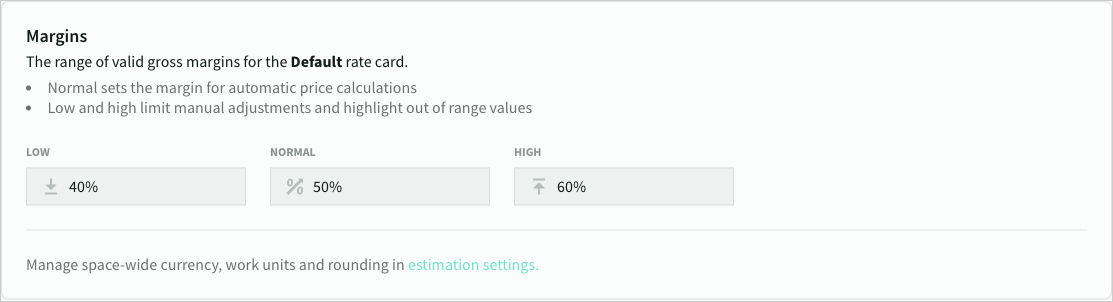 Estii deal margin breakdown showing role-level margin against the deal floor
Classify the ask before you concede anything
When a buyer asks for a discount, work out what kind of ask it is. The label changes the right move.
- Procurement discount. "We always get 10%." Often ritual. A token concession on terms, not price, often clears it.
- Budget constraint. "We have $X." This is a scope conversation, not a price conversation.
- Comparative pressure. "Competitor is cheaper." Either the scope is different or the risk profile is different. Find which.
- Perceived risk. "We're not confident this will work." Discount won't fix it. A milestone structure or a smaller phase one will.
- Timeline pressure. "We need it faster." Almost always the hidden cause. Compressing the schedule is the most expensive concession you can make, but it gets framed as a date discussion.
Treating all five as "price down" is lazy and expensive.
A concession menu, in order of preference
If you're still deciding whether fixed price, T&M, or retainer is the right frame, start with how to choose a pricing model before opening the concession conversation.
Scope concessions, the default
Best when buyers are budget-constrained or price-sensitive.
What to trade:
- remove low-priority features
- move items to a later phase
- reduce non-essential deliverables, like documentation depth or reporting frequency
- narrow support scope, hours or channels
The buyer gets a lower price. You reduce real delivery work, so margin is protected. This is the only concession type where both sides actually win.
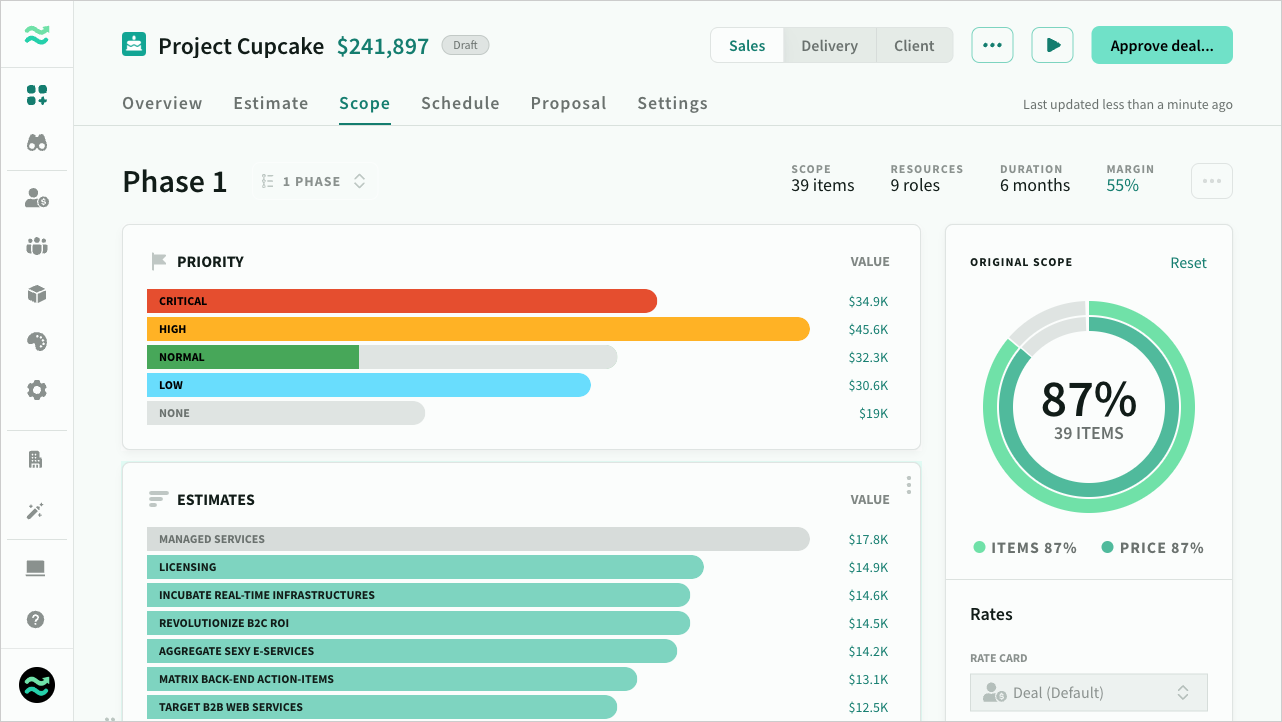 Estii scope page with a workstream descoped, showing price and schedule recalculated
Timeline concessions, high leverage
Best when the deal includes urgency the buyer hasn't fully justified.
What to trade:
- a longer delivery window
- flexibility on the start date
- reduced meeting cadence, time-boxed stakeholder availability
Rushed schedules create hidden costs: onboarding compression, context switching, overtime, change-request noise. A more realistic schedule usually improves delivery quality and reduces the change-order tax later.
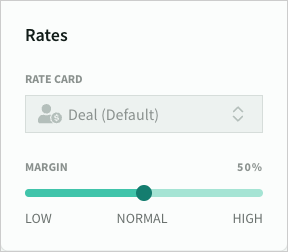 Estii schedule view showing a stretched timeline with rate cascade
Terms concessions, underused
Best when the buyer needs a lower total number on paper but you need to protect cash flow and risk.
What to trade:
- an upfront milestone payment
- shorter payment terms
- a longer commitment for recurring services
- clearer acceptance criteria
Often the buyer says "lower price" and means "lower risk". Payment structure does that without touching the rate card.
Price concessions, last resort
If you must reduce price, do it deliberately:
- apply the discount to a specific phase, not the whole deal
- restrict it to certain roles, exclude high-cost specialists
- tie it to a condition: signature by date, fixed scope, accelerated payments
The goal isn't a lower price. The goal is a lower price without destroying the economics.
Package three options, don't argue one number
The most effective negotiation move is a 3-option structure:
- Fast. Higher price, shorter timeline, broader scope.
- Balanced. Best value, realistic schedule, clear scope.
- Lean. Lower price, reduced scope or longer timeline.
Buyers hate feeling like they're losing. Options make the trade-offs visible and give the buyer agency over which lever moves. In a proposal, this is a phase breakdown that shows what's included in each option, a schedule summary per option, and milestone and payment terms per option, all priced from the same underlying estimate.
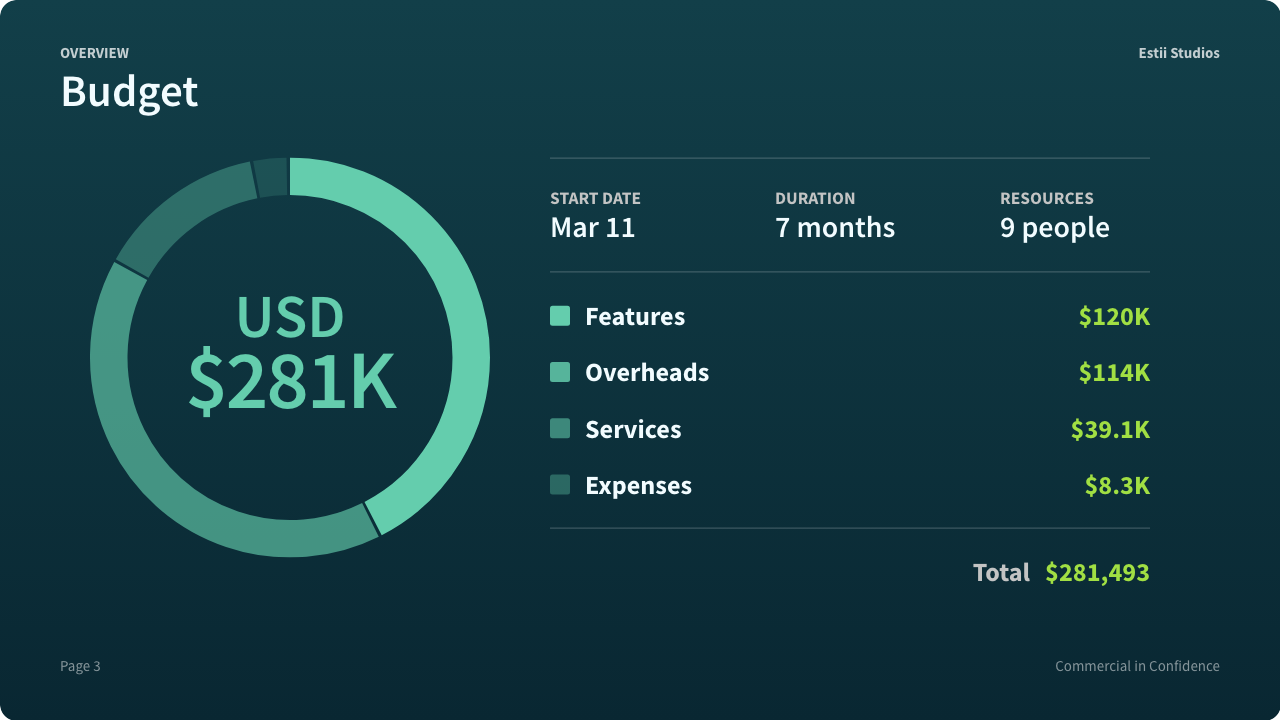 Estii deal versions header showing multiple priced options for the same deal
The four traps
Discounting without descoping. Scope stays the same, price drops, margin drops, delivery pressure rises, quality suffers. The most common pattern, and the most expensive.
"Free extras". "Can you include training?" "Can you include a rollout plan?" "Can you do the documentation?" These aren't free. They're scope. Price them or trade them.
Compressed timeline plus discounted price. The worst combo. It increases cost and risk while reducing revenue. If the buyer is asking for both, one of you is going to regret the deal.
Unclear acceptance criteria. If you can't define what "done" means, you can't protect a fixed price, and you can't contain change. Acceptance criteria are a margin instrument, not a paperwork chore.
Where Estii fits
Estii makes the trade rule mechanical instead of disciplinary. Click any priority, item, or workstream on the scope page to descope it; effort, value, price, schedule, and every breakdown recalculate together, so a "remove the reporting module" trade lands as a re-priced proposal in two clicks. Payment milestones let you stage cash flow as a terms concession without touching the rate, and rate cards keep role-level margin floors visible while you negotiate. Before you apply a meaningful concession, the next redraft snapshots a deal version automatically, so what changed and why is easy to explain to your team or back to the buyer. When the buyer wants three options, regenerate from the same model into a proposal with a structured SOW appendix per option.
A lightweight policy you can adopt today
- Any discount requires one of: scope reduction, timeline extension, or terms improvement.
- Any deal below the minimum margin requires explicit approval, named in the deal record.
- Any "free extra" must be written as scope, then either priced or traded.
Wrapping up
Discounts aren't evil. Undisciplined discounts are. Treat discounting as a structured trade across scope, schedule, and terms, and you'll close deals faster, then deliver them without margin regret. If the conversation keeps coming back to "which number is right", revisit how to choose a pricing model before the next round.